

Living in a tropical climate usually means a heavy reliance on air conditioning and soaring energy bills. But what if your home could naturally stay cool?
The secret isn’t magic it’s smart architecture. This article explores 4 essential ‘Passive Design’ strategies
1.House Orientation
Proper house orientation is the first line of defense in preventing heat gain and capturing natural breezes.
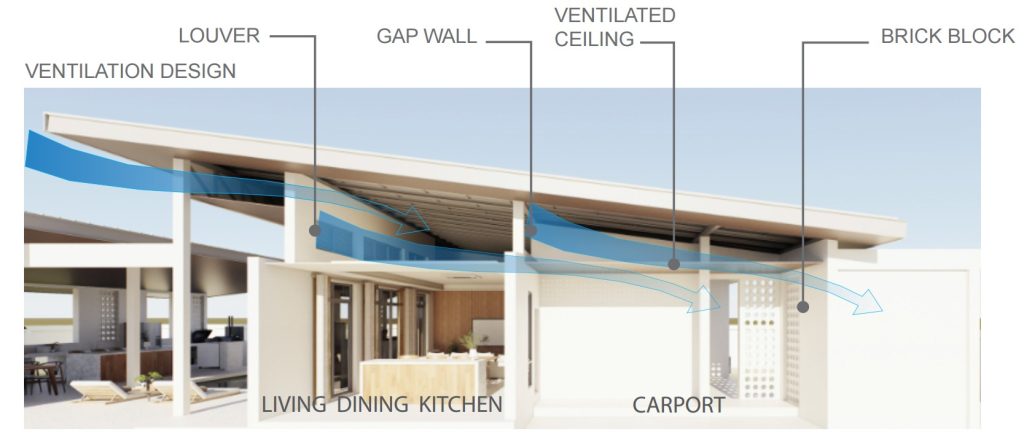
In Thailand, the sun path travels from east to west, leaning towards the south for about 8-9 months of the year. Thus, the south and west facades receive the highest heat load. Orienting large windows or primary living spaces toward the North prevents direct solar heat gain. Additionally, seasonal winds blow from the southwest and northeast. Aligning openings with these wind directions facilitates cross-ventilation, which efficiently sweeps hot air out of the building.
2.Double-Wall Construction
Walls make up the largest surface area of a house, making heat protection in these areas highly effective and noticeable.
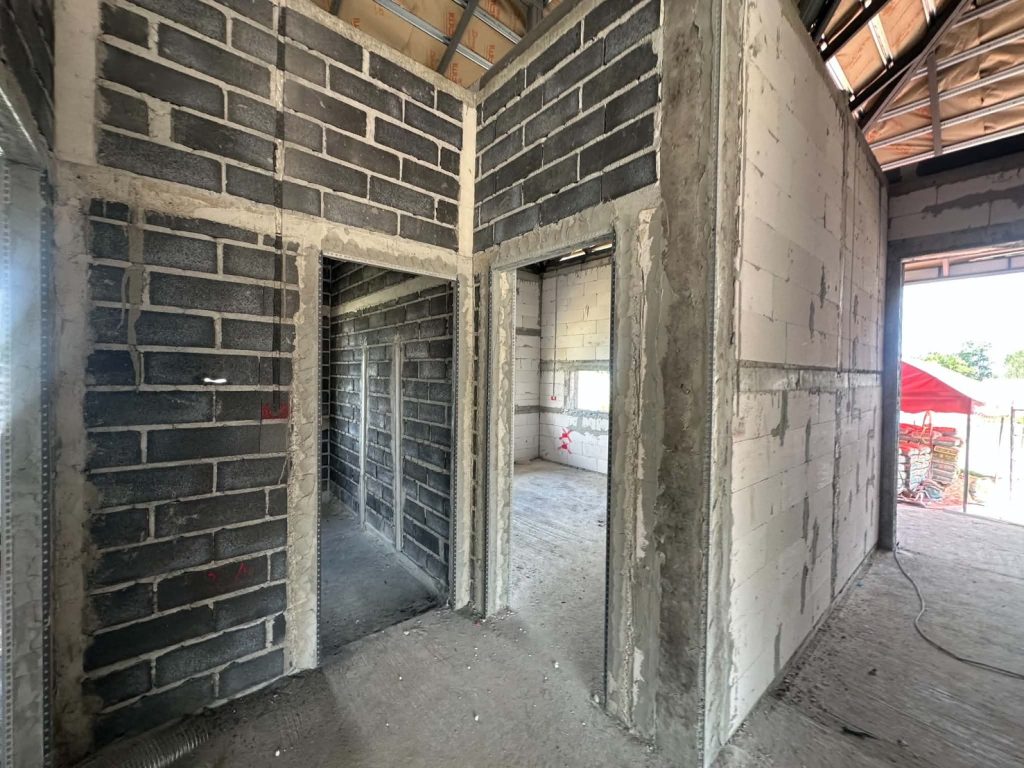
This method utilizes an “air gap” as a thermal insulator. When the exterior wall absorbs heat from the sun, the air trapped between the outer and inner walls significantly slows down heat transfer (thermal conduction). This prevents the heat from directly penetrating the interior wall, keeping the indoor living space noticeably cooler.
3.Double-Glazed Windows / Insulated Glass Units
Standard glass windows are the points where heat can most easily penetrate the home.
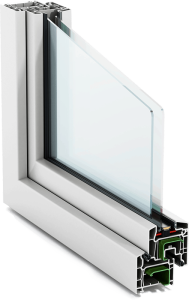
Double-glazed windows consist of two glass panes separated by a sealed space filled with dry air or an inert gas (like Argon). These gases have very low thermal conductivity, drastically reducing the amount of outside heat that can radiate indoors. For maximum efficiency, this is often paired with Low-E (Low Emissivity) glass, which features a microscopic metallic coating that reflects solar heat (infrared radiation) away while still allowing visible light to enter.
4.Roof and Attic Design
The roof receives direct sunlight all day long and accounts for retaining up to 70% of the heat inside a house.
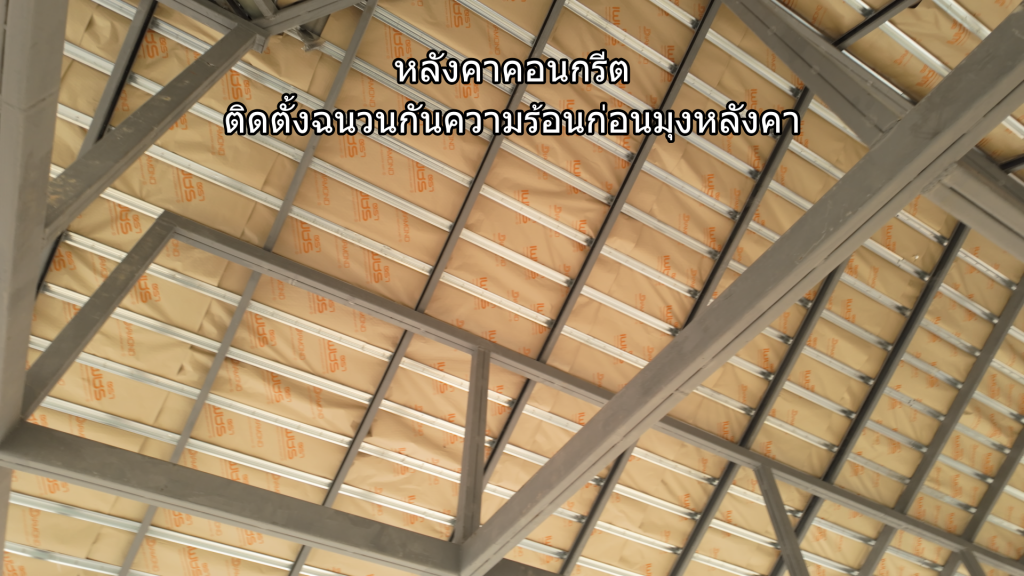
For concrete roofs, install thermal insulation before roofing. Cooling a roof requires a two-step approach: Blocking and Venting.
Installing radiant barriers and thermal insulation (such as PU foam or fiberglass) above the ceiling blocks heat transfer.
Designing a high attic space with adequate ventilation (gable vents or soffit vents) is crucial. Hot air naturally rises, and these vents allow the trapped heat to escape to the outside following the principles of buoyancy (Stack Effect).
Integrating these building science techniques significantly reduces the load on air conditioning systems, resulting in a highly energy-efficient home and ensuring genuine thermal comfort for its occupants.
Ready to Start Your Project?
Don’t leave your dream home to chance. When searching for a home builder in Udon Thani, choose a team with a reputation for finishing on time and within budget.
Contact Quality Touch Construction today for a free consultation:
Website: qualitytouch.homes
Email: contact@qualitytouch.homes
Phone: 063 421 1054